Wednesday, April 21, 2010

Catching Up With An Old Friend: Louise Cavanaugh on The Shadow of the Wind

Catching Up With An Old Friend is a series in which readers, authors, and other bookish people share their favorite books. Read more about the project or see all the past entries. To participate, e-mail atticsaltblog@gmail.com.

•••••
Today's favorite book is from Louise Cavanaugh, who teaches third grade. She lives with her husband and two mischievous cats in Holyoke, Massachusetts, where she grew up. She enjoys reading mysteries and doing crossword puzzles.

•••••
Carlos Ruiz Zafón's 2001 novel The Shadow of the Wind (originally published in Spain) is my very favorite book. It's the magical and mysterious story of Daniel, a young boy who finds a rare book in the Cemetery of Forgotten Books, a library of old, forgotten titles. After he finds the book, also named The Shadow of the Wind (by Julián Carax in the novel), Daniel meets a man who reminds him of a character from the novel and learns that he's tracking down every one of Carax's novels and burning them. This sets off a chain of events — including violence and murder — as Daniel is determined to figure out what's going on with Carax.

Zafón sets the novel in Barcelona post-World War II, a place filled with intrigue. His use of description and his amazing characters made it almost impossible to put this book down. It's a true masterpiece.

Monday, April 19, 2010

Pride and Prejudice, Chapters 25-39

The Bennet ladies go a-traveling during this section — Jane to stay with the Gardiners, her aunt and uncle in London, and Elizabeth to visit Charlotte and Mr. Collins. Before they go, Mrs. Gardiner tells Elizabeth that she thinks Wickham would be a bad match for her, due to his lack of money, and then she finds out that he is now interested in another lady, Miss King. Elizabeth says she isn't too sorry, and that probably means she didn't love him to begin with.

In London, Elizabeth suffers through a string of uncomfortable (yet amusing) dinners with Catherine De Bourgh and her sickly daughter (the young lady Darcy is expected to marry, as she is his cousin) in which Lady Catherine dominates the conversation while Mr. Collins, Charlotte, and Charlotte's father and sister swoon at the attention Lady Catherine pays them. Then Darcy arrives, along with his cousin, the gregarious Col. Fitzwilliam, and things improve for everyone. Elizabeth starts to get close to the Colonel, and she learns that Darcy stopped his friend from marrying a girl who he thought was a bad match. Elizabeth assumes that it's Jane and Bingley, and she's outraged. Darcy begins "accidentally" running into Elizabeth while she's out walking, and later pays her a visit when she's the only one home. Elizabeth can't figure out why he's behaving like this, and Charlotte wisely tells her that he must love her.

He does — Darcy proposes to Elizabeth, and as her response, Elizabeth tells him: "I had not known you a month before I felt that you were the last man in the world who I could ever be prevailed on to marry." She tells him that she can't believe he convinced Bingley not to marry Jane and accuses him of interfering in Wickham's livelihood. Darcy comes to see her the next morning and hands her a letter that explains everything.

It turns out that Darcy thought Jane wasn't really into Bingley and he didn't want his friend to get his heart broken. He also mentioned that the Bennet parents and younger siblings are pretty socially awkward, which is true. As for Wickham, it turns out that he squandered money and tried to elope with Darcy's sister to gain her fortune. Elizabeth realizes that her opinions of Darcy were based on rumor and untruth, and wonders what else she has been wrong about.

This section marks the turning point in Pride and Prejudice — Elizabeth realizes that she's been too quick to judge people, while Darcy realizes that his pride is getting in the way of his being happy. I think we all know where things are headed, but it's fun to watch them get there and have Darcy and Elizabeth work to correct their flaws, which are heavy ones compared to the flaws in Sense and Sensibility.

As Cassandra noted in the comments from last week, "While it was difficult to take Marianne seriously and Elinor often came off like a martyr, Jane and Elizabeth complement each other so well, and are both genuinely good, lovable people. Jane's flaw, being too trusting and refusing all but the best possible interpretations of someone's actions, is not a moral failing. Lizzie's propensity to pre-judge people and satirize foibles is actually a more serious shortcoming, but because it is rooted in good humor and genuine emotional insight, neither is it wholly bad."

While Elizabeth judges people too quickly and Darcy's pride is an obstacle to marrying Elizabeth, their pride and prejudices do not necessarily result in hurting other people — in fact, with the exception of each other, their flaws don't have any great effect on anyone else in the novel. Is that Austen's way of ensuring we'll like both characters?

As a side note, Darcy's proposal — Elizabeth's second in a short period of time — reminded me of a line from The Importance of Being Earnest, when Lady Bracknell says: "I do not know whether there is anything peculiarly exciting in the air of this particular part of Hertfordshire, but the number of engagements that go on seems to me considerably above the proper average that statistics have laid down for our guidance."

Next week's reading is chapters 40-50.

Friday, April 16, 2010

Review: Special Topics in Calamity Physics

You love some books from the first page — they start with a bang and are wonderful until the last page. You love some books from the last page — in retrospect they're notable and important, but the process of reading them may not have been wonderful. Then there are some books that start off all wrong for you, but you stick with them and are rewarded when the author settles into her story and finds her voice — sometimes books just need to warm up.

Marisha Pessl's 2006 novel Special Topics In Calamity Physics belongs to the latter category. I was initially turned off by it, as I found overwhelming similarities between it and Donna Tartt's 1992 novel, The Secret History — some sentences are almost identical — but then Pessl saves her novel by doing something really unbelievable with the ending.

Special Topics in Calamity Physics is about Blue van Meer, a high school senior starting the school year in a small town in North Carolina. Blue has spent her whole life traveling around the country with her professor father (her mother died 11 years earlier), and narrates the tale from the future, when she is a student at Harvard. At school she falls in with a group of cool, beautiful students and their cool, beautiful film teacher, though they initially keep her at arm's length. As the fall semester progresses, Blue learns that her friends aren't quite what they seem, and, after the death of a man at a party, she realizes that everyone may be caught up in some dangerous activities.

This almost parallels The Secret History, except it takes place in high school instead of college and the teacher is a woman and not a man. But a third of the way through, Pessl shifts the narrative slightly and makes it entirely her own. The focus here isn't on the other students, though elegant Jade, beautiful Charles, ethereal Lu, and the others would be fascinating if Pessl actually did something with them — then again, Blue is the narrator, and the students are not the focus of her story. Instead the object of scrutiny is Hannah Schneider, a 44-year-old film teacher who "adopts" students, bringing them into her home each Sunday for dinner and encouraging their potential in any way she can. It's odd, though, how they all come together, and Pessl never really quite tells us the impetus for each character joining the group.

The best thing about Special Topics in Calamity Physics is that the ending is so incredibly unexpected. I do read mysteries from time to time, but never have a read a mystery (which this novel is, in part) that turned everything on its head so wonderfully — we learn that not a single character is as they seem.

Pessl is an engaging writer, crafting memorable characters (Blue's father is amazing. Lately I've been thinking about parental figures in novels, more on that later I'm sure.) and working with the canon (chapter titles are named for classic books and parallel the plots of those books). It isn't perfect — at times it strays into cliché (how many novels do we need about groups of outsider college students drawn together by a professor?) and if it weren't for the ending I wouldn't have liked it half as much — but I've already recommended it to someone, a sure sign that I like a novel.

Wednesday, April 14, 2010

Catching Up With An Old Friend: Emily St. John Mandel on Hopscotch


Catching Up With An Old Friend is a series in which readers, authors, and other bookish people share their favorite books. Read more about the project or see all the past entries. To participate, e-mail atticsaltblog@gmail.com.
•••••

Today's favorite book is from Emily St. John Mandel, the author of Last Night In Montreal. Her second novel, The Singer’s Gun, will be published in May.

•••••
I have a lot of favourite books, but the one I come back to most frequently is Julio Cortazar's Hopscotch. It's the story of an Argentinian writer, Horacio Oliveira, who lives with his girlfriend La Maga in Paris. Horacio and his circle of friends are uniformly poor and over-educated, philosophizing endlessly and listening to jazz and not quite getting around to writing their masterpieces in low-rent rooms in questionable neighborhoods. This is an oddly cold bohemia they inhabit, intellectual at the expense of heart and soul, and it takes a catastrophe to catapult Horacio out of it; after the death of a child and the disappearance of La Maga he returns to Buenos Aires, where he struggles to find his place in the world.

The writing is dazzling, and the novel has the strangest structure of any book I've ever read. It's essentially two books in one: you can either read it in the strictly traditional sequential manner, chapter 1, then chapter 2, etc., and so on until you reach the end of chapter 56, or you can follow a chart of chapter numbers at the front of the book, which requires that you start the novel at chapter 73. From there you proceed to chapter 1, then 2, then 116, then 3, and so on and so forth, hopscotching (sorry) around the text until you get trapped in a back-and-forth loop between chapters 58 and 131.

The basic framework of the story remains the same, but the two versions yield subtly different books; layers are revealed in the second version of the book that are only hinted at in the first. Every year I fall in love with a few more books and mentally add them to my favorite book list, but Hopscotch is the one that I return to over and over again.

Monday, April 12, 2010

Pride and Prejudice, Chapters 12-24

We catch up with the Bennet sisters at Netherfield, where they are still staying since Mrs. Bennet refuses to fetch them until they've been there a week. Luckily Bingley sends them home, where Mr. Bennet is pleased to see them and his wife is annoyed they have returned "early."

This section is dominated by Mr. Collins, a cousin of Mr. Bennet's who is in line to inherit Longbourn, as he is Bennet's closest male relative. Collins comes to visit and it turns out that he doesn't want to check out his future inheritance but rather decide which Bennet sister to propose to. Unfortunately for Collins, all the Bennets (Mrs. excluded) think he's a big fool - he's long-winded, self-absorbed, and generally unpleasant to be around.

During his visit, Collins and the Bennet sisters walk over to Meryton, where they run into Darcy and Mr. Wickham, a charming, handsome man. Elizabeth notices some animosity between the two men, but doesn't discover its source until she sits next to Wickham at a dinner: he tells her that he has known the Darcy family for some time, and that Darcy's father promised to give him a parish at their estate. After his father's death Darcy broke the promise. Wickham paints Darcy in an ill light, matching Elizabeth's initial impressions of him, and she encourages his negative comments. She also finds herself mildly smitten with Wickham.

The Bingleys throw a ball at Netherfield and Elizabeth is disappointed when Wickham doesn't come. She does, however, dance and spar gloriously with Darcy. The ball is a mess, though, thanks to the Bennet family's strange behavior — Mrs. Bennet brags loudly that Jane will marry Bingley, Mary sings loudly and awkwardly for the entire party, and the Bennets are the last people to leave. Elizabeth is mortified.

The next day Collins proposes to Elizabeth. Elizabeth shoots him down repeatedly, but he takes this as encouragement. Mrs. Bennet, outraged that her daughter would turn down a marriage proposal, refuses to speak to her. She goes to her husband for help, and he delivers the best line of the novel so far: "An unhappy alternative is before you, Elizabeth. From this day you must be a stranger to one of your parents. Your mother will never see you again if you do not marry Mr. Collins, and I will never see you again if you do." Amazing.

Miss Bingley writes Jane a letter to tell her that she and her brother have left Netherfield for good, and that she expects her brother will marry Miss Darcy. Jane is pretty upset, and Elizabeth tells her that the Bingley sisters are trying to keep Jane and Bingley apart, but Jane doesn't believe her. Things get awkward for everyone when Elizabeth's friend Charlotte woos Collins, and he proposes to her - right after he proposed to Elizabeth. The Bennets question how Charlotte could marry someone like Collins, while Mrs. Bennet laments the loss of the estate from their family.

I'm interested in the ways Austen portrays class in Pride and Prejudice, and class becomes even more important in the section we're reading for next week. The novel has characters who look down on others for their social standing (Darcy, Miss Bingley) and of characters who look up to others because of their social standing (the younger Bennet girls, Mrs. Bennet). Austen uses Collins to satirize the latter type of character, as he praises his ridiculous patroness Lady Catherine ad nauseum throughout his visit to the Bennets. For Austen, class isn't everything — it's just a tiny part of who you are.

Anyone have thoughts on class in the novel? Or about how lucky we are that our mothers are not like Mrs. Bennet? Next week's reading is Chapters 25-39.

Friday, April 9, 2010

Mystery on Main Street in Brattleboro, Vt.


On a recent visit to Vermont, I went to Mystery on Main Street, a mystery-only bookstore in Brattleboro. It's a small space, but one filled with every major mystery author from around the world that you've heard of — and many you haven't. The British edition of The Girl Who Kicked the Hornet's Nest was displayed prominently (over two months before it would be available in the U.S.) and one wall was lined with books. In the back, you can find an Edward Gorey (a personal favorite) gift section, with books, magnets, bookmarks and things of that nature, as well as Nancy Drew and Hardy Boys books.

Mystery on Main Street holds author events and maintains a pretty cute web site that's updated with new releases and an index of local authors. They're currently working on an online store, but for now you can place an order with them over the phone. I picked up a book there, thanks to a recommendation from the man working, and ended up loving it.

Have a great independent shop to plug on Attic Salt? Drop an e-mail to atticsaltblog@gmail.com.

Wednesday, April 7, 2010

Catching Up With An Old Friend: Marjorie Kehe on Jane Eyre


Catching Up With An Old Friend is a series in which readers, authors, and other bookish people share their favorite books. Read more about the project or see all the past entries. To participate, e-mail atticsaltblog@gmail.com.
•••••

Today's favorite book is from Marjorie Kehe, the book editor for the Christian Science Monitor. She blogs daily at Chapter and Verse. She has a degree in Italian language and literature from Middlebury College and a PhD in comparative literature from NYU. Marjorie lives in Boston, Mass., and reads most comfortably with two cats in her lap and her dog Sheba at her feet.

•••••
Is it true that what we are at 10 is pretty much what we remain for the rest of our lives? Perhaps so, because I was 10 the first time I read Jane Eyre and several decades have passed since but it is still my favorite book.

I have no idea how many times I have read it. It seems to me that between the ages of 10 and 12 or so I practically memorized it. After that, I began to pick it up once every few years or so.

Every time I do, I discovered something new. When I was younger it was, of course, the romance that appealed to me most and I tended to rush through the pages that didn’t include Mr. Rochester.

As an adult, however, I’ve come to love the stretches when Jane is on her own – enduring her horrid family, growing as a student at Lowood, wandering lost after leaving Thornfield, and living quietly, purposefully, with St. John and his family. These are the periods in which she develops her character and her courage and it is that character that makes her – for me – the perfect literary heroine. She’s not beautiful, she’s not wealthy, she’s not physically imposing in any way. But she’s brave and she’s bright and she’s got a fiercesome ability to put her thoughts into words – especially when she’s indignant.

I’ve long thought that you could divide all women into two categories – those who prefer Jane Eyre and those who prefer Wuthering Heights. I am definitely in the former camp. Nothing against Wuthering Heights. But picture, if you will, a tiny, plain, working-class woman addressing her wealthy employer – a man with whom she happens to have fallen in love. She thinks he is leaving her to marry someone else. She tells him, “I have as much soul as you, – and full as much heart! And if God had gifted me with some beauty and much wealth, I should have made it as hard for you to leave me, as it is now for me to leave you.”

But we readers know that he will never willing leave her, because the beauty of her character has captivated him, and, as a result, the Blanche Ingrams of the world no longer stand a chance.

Maybe it’s time for me to read it again.

Monday, April 5, 2010

Pride and Prejudice, Chapters 1-11

For this week we read the first 11 chapters of Pride and Prejudice, and I have to start by saying that this is the Austen novel I've most been looking forward to reading. It's the best known, certainly, and it has spawned two great movie versions — the 1995 BBC series with Colin Firth and Jennifer Ehle and the 2005 film with Keira Knightley and Matthew Macfadyen — so I already know the plot going in. The novel has also lead to innumerable mash-ups, spin-offs, and tributes, so clearly the characters and plot resonate with people to an extent that her other novels do not.

So what I really want to discover about Pride and Prejudice is whether it lives up to the hype. Is Austen's Elizabeth Bennet going to be just as dynamic as her on-screen portrayals? Is Mr. Darcy really the ultimate Austen hero? My gut tells me yes, and at only 11 chapters in, I already like Pride and Prejudice more than I liked Sense and Sensibility; Austen still does too much narrating in lieu of having her characters exhibit or talk about their feelings, but Elizabeth and Darcy have crackling repartee and the Bennet parents are hilarious.

The novel starts with Mrs. Bennet's announcement to her husband that Mr. Bingley, a highly eligible bachelor, has moved into the neighborhood, and she instructs him that he must go visit him so their daughters can meet him. He does, and the sisters — Jane, the eldest, is pretty; Elizabeth is smart; Lydia and Catherine are boy crazy; and Mary is quiet and kind of odd — meet him at a ball, where Bingley is quite taken with Jane. We also meet Bingley's friends who are staying with him — Mr. Darcy, his sisters Caroline Bingley and Mrs. Hurst, along with the latter's husband. Darcy is quite rude to everyone at the ball, refusing to dance and telling Bingley that he doesn't find Elizabeth pretty. Unsurprisingly, Elizabeth and the others want little to do with him, though Miss Bingley keeps blatantly trying to get his attention.

The Bingley sisters invite Jane over for dinner and she falls ill while at their estate (having ridden there on horseback in the rain, per her mother's instructions) and is unable to leave. Elizabeth walks over there to stay with Jane, and both sisters spend time with the Bingleys and Darcy. Elizabeth doesn't care for the Bingley sisters, finding them shallow and frivolous, while she likes Mr. Bingley, mostly because his regard for Jane is obvious.

Austen tells us that Darcy realizes he actually does find Elizabeth pretty, but Elizabeth thinks he is excessively proud. At the close of chapter 11, Elizabeth and Darcy tell each other what they perceive each other's main flaw to be — "Your defect is a propensity to hate everybody," Elizabeth tells Darcy. "And yours… is to willfully misunderstand them," he replies.

And with that, we're off to a great start with this novel. Who's playing along (or has read Pride and Prejudice) before, and what do you think of the book so far?

Friday, April 2, 2010

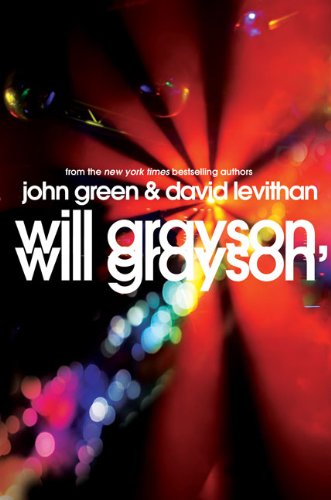
Review: Will Grayson, Will Grayson

“this is why we call people exes, i guess – because the paths that cross in the middle end up separating at the end. it’s too easy to see an X as a cross-out. it’s not, because there’s no way to cross out something like that. the X is a diagram of two paths.” [sic].

So says Will Grayson, partial narrator of the new dual-authored novel Will Grayson, Will Grayson (out on Tuesday), making rare use of capitalization. Though he may not realize it, Will Grayson is describing the structure of the novel, which follows the X-like paths of two teenagers who have the same name.

Will Grayson is co-written by reputable YA authors John Green and David Levithan, each writing half the novel from the perspective of one Will Grayson. This is similar to Levithan’s work with Rachel Cohn in Nick and Norah’s Infinite Playlist and Naomi and Ely’s No Kiss List. The gimmick works here like never before, as the Wills collide together in a perfect storm of adolescent identity crises.

Levithan’s Will is a perpetually withdrawn closeted gay kid with a regiment of antidepressants and a lonesome, Pride and Prejudice-obsessed single mother. Green’s Will is similarly withdrawn although he fits into a less oppressive social caste than Levithan’s. Green’s Will withdraws by conscious choice, making two rules for himself: “1. Don’t care too much. 2. Shut up.”

Will has created this ‘seen and not heard’ defense mechanism in the social fallout of having publicly supported, in writing, his best friend’s open homosexuality. That friend is Tiny Cooper, ironically nicknamed (and flamingly gay) giant football player. Tiny will be the node at which the two Will Graysons intersect and also the novel’s thematic nexus.

Tiny is the rare openly gay high schooler; in the hallways he flaunts his homosexuality in a way that not only wears down the homophobia of his classmates but also wears down the patience of his best friend Will. When Tiny later gets close to the other Will Grayson, the moody, insular one who thinks in lowercase, he forces both Wills, already reflexively questioning themselves, to come up with some answers.

Within their contemporary suburban setting, Green and Levithan make expert use of the gadgets and Internets that keep teenagers (and adults, when you get right down to it) from making connections with others. It’s poignant and heart-wrenching to witness these poor kids desperately constructing extensions of themselves via Facebook, text message and chat room, but neglecting to reinforce the foundations of their actual physical and mental selves. At one crucial moment, a character stumbles upon an emotional truth by tapping out an e-mail on his cell phone that he will never send.

The novel’s most sweeping example of this is the arc of Tiny’s original musical, Tiny Dancer, which goes from page to stage over the course of the book. The musical is an overhyped epic autobiographical tale of growing up out and proud, but of course there’s more to Tiny’s self-possession than pride. The play, like most of the characters’ actions, represents a desperate existential plea for validation.

Tiny forces the Wills into a love triangle that contrasts romantic love with platonic by questioning which is easier to fall in to or out of. Upon meeting each other, the two Will Graysons must confront their own demons head on:  not only are you not very good at being you, but suddenly you have to compete. Who are you, really, if you aren't even the only one who's you?

The solution they find — that the self must be defined both in terms of the people who love you but also in terms of, you know, yourself — may be a little contrived and easy for a group of humans as realistically flawed as these, but it’s also touching and, more importantly, instructive. The tale of two Will Graysons becomes a fable about the essential need to be okay with yourself before you can be okay with other people. I wish I’d had this book when I was in high school.

•••••
Todd Detmold is the proprietor of My Favorite Gum Commercial. Were he ever to confront a second Todd Detmold, the universe would likely collapse in upon itself in a cloud of passive aggression. To contribute a review or other literary musings to Attic Salt, e-mail atticsaltblog@gmail.com.

Thursday, April 1, 2010

Pride and Prejudice Kick-Off

Having wrapped up Sense and Sensibility, it's onto April's book — Pride and Prejudice. Here's the schedule for the next month of readings, if you'd like to join me in reading Austen's second novel. There are 61 chapters in the book, which means you would have to read just over two chapters a day (and these are usually just a couple pages) to finish the book in April. I shifted things around slightly to try and even out number of pages for each week. The schedule:

Monday, April 5 - Chapters 1-11
Monday, April 12 - Chapters 12-24
Monday, April 19 - Chapters 25-39
Monday, April 26 - Chapters 40-50
Friday, April 30 - Chapters 51-61

See you here Monday to talk Elizabeth Bennet and Mr. Darcy!